
 Image 1 of 1
The Ka Profile PSV is derived from the Tzulukin Calendar—an ancient cultural American field-mapping system, modernized to measure how emotional magnetism and attraction operate within the Earth’s electromagnetic phase-states.
Where the Core Profile identifies foundational self-magnetism, the Ka Profile focuses specifically on causality through emotion: how forces are drawn toward you, what you are pulled toward, and how relationships, events, and circumstances either develop or dissolve over time.
These are causality aspects.
They do not describe mood or personality — they describe attractive mechanics.
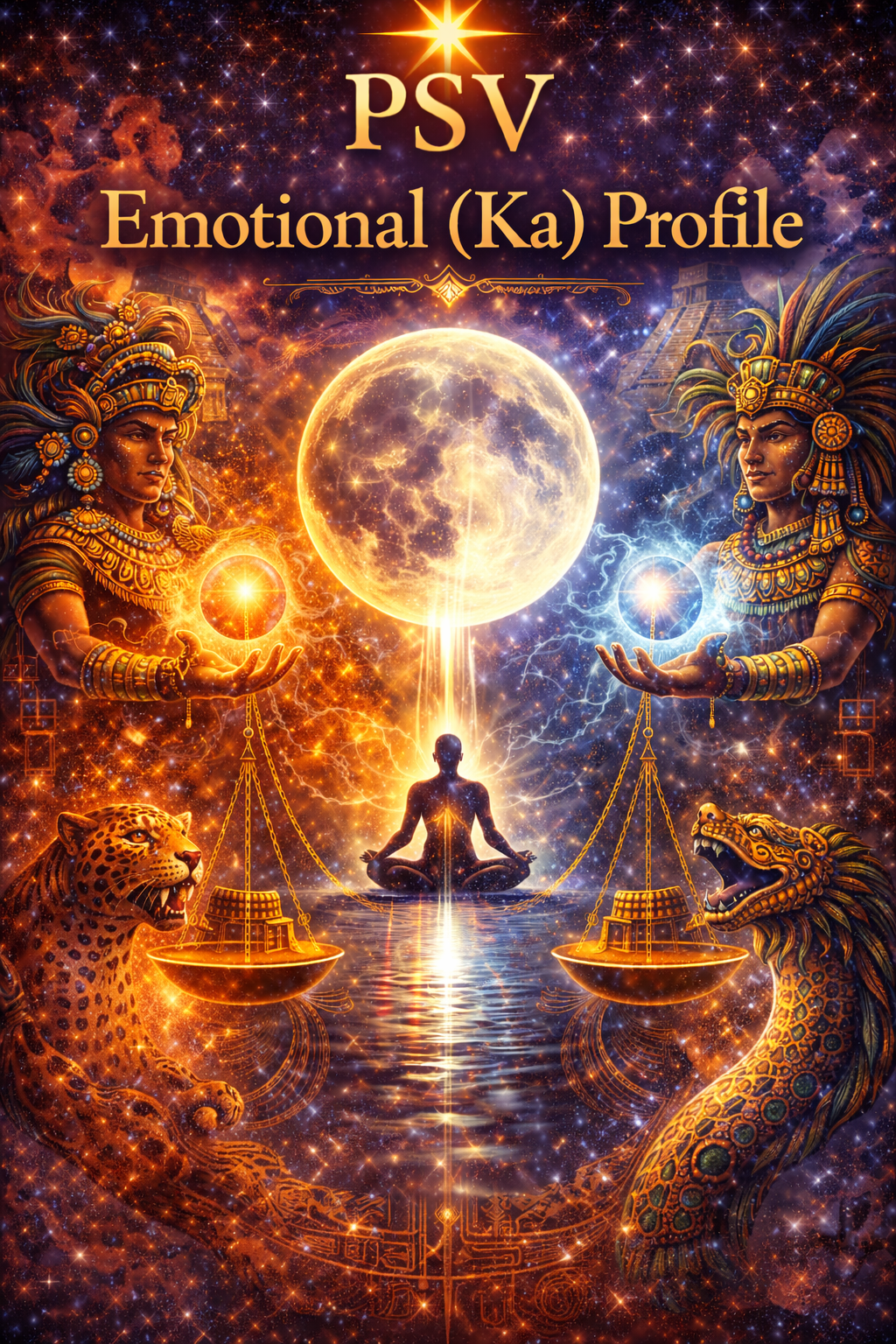
The Ka Profile is delivered as a three-aspect structure:
Top Ka Aspect
Identifies the emotional force you are drawn toward, required to follow, or must consciously engage.
This is the cause vector of emotional attraction.
Ka (Center) Aspect
Identifies the force upon which your emotional field stabilizes and balances.
This is the fulcrum where attraction converts into experience.
Bottom Ka Aspect
Identifies the emotional force that follows you — what you consistently attract, encounter, or evoke in others.
This is the effect vector of emotional causality.
Together, these three aspects form a complete attraction circuit.
A Ka Profile can be identified for:
Any individual (living or deceased)
The beginning of any relationship, event, or circumstance
Planned conceptions
Brands, businesses, and organizations
Word-mapped statements and phrases
In all cases, the Ka Profile reveals the emotional forces initiated at the moment of inception and how they propagate forward in time.
Each Ka aspect is delivered with:
Ancestral and elemental force context
Core emotional and magnetic function
Positional influence within the field
Positive and negative keywords, triggers, and distortions
Force-of-field behavior (how attraction operates)
Subjective emotional effect
Light field initiative
Practical magnetic tools to:
Stabilize emotional balance
Reduce attraction-based friction
Work consciously with emotional causality
Avoid predictable relational or experiential dysfunction
The result is a precise emotional field map, not an interpretive reading.
The Ka Profile PSV is derived from the Tzulukin Calendar—an ancient cultural American field-mapping system, modernized to measure how emotional magnetism and attraction operate within the Earth’s electromagnetic phase-states.
Where the Core Profile identifies foundational self-magnetism, the Ka Profile focuses specifically on causality through emotion: how forces are drawn toward you, what you are pulled toward, and how relationships, events, and circumstances either develop or dissolve over time.
These are causality aspects.
They do not describe mood or personality — they describe attractive mechanics.
The Ka Profile is delivered as a three-aspect structure:
Top Ka Aspect
Identifies the emotional force you are drawn toward, required to follow, or must consciously engage.
This is the cause vector of emotional attraction.
Ka (Center) Aspect
Identifies the force upon which your emotional field stabilizes and balances.
This is the fulcrum where attraction converts into experience.
Bottom Ka Aspect
Identifies the emotional force that follows you — what you consistently attract, encounter, or evoke in others.
This is the effect vector of emotional causality.
Together, these three aspects form a complete attraction circuit.
A Ka Profile can be identified for:
Any individual (living or deceased)
The beginning of any relationship, event, or circumstance
Planned conceptions
Brands, businesses, and organizations
Word-mapped statements and phrases
In all cases, the Ka Profile reveals the emotional forces initiated at the moment of inception and how they propagate forward in time.
Each Ka aspect is delivered with:
Ancestral and elemental force context
Core emotional and magnetic function
Positional influence within the field
Positive and negative keywords, triggers, and distortions
Force-of-field behavior (how attraction operates)
Subjective emotional effect
Light field initiative
Practical magnetic tools to:
Stabilize emotional balance
Reduce attraction-based friction
Work consciously with emotional causality
Avoid predictable relational or experiential dysfunction
The result is a precise emotional field map, not an interpretive reading.